
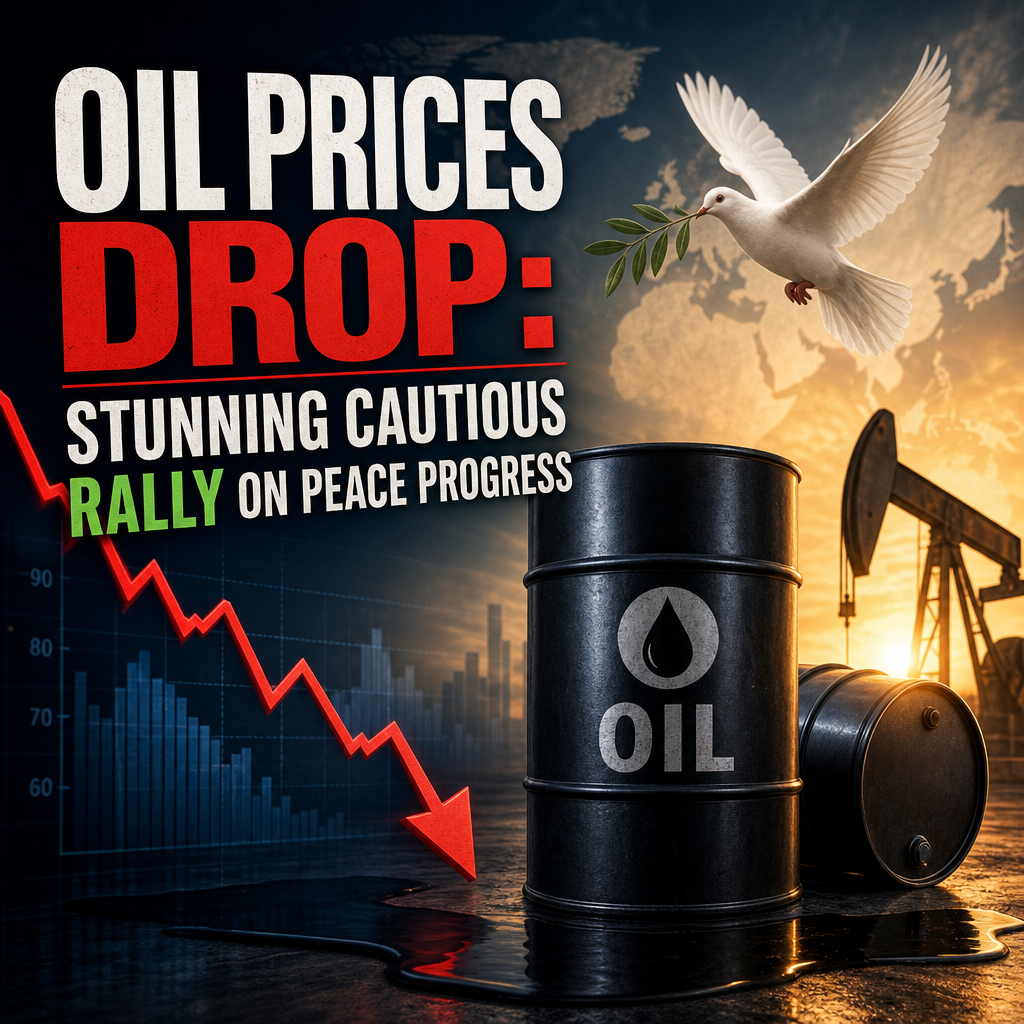
Oil Prices Drop: Stunning Cautious Rally on Peace Progress


Oil Prices Drop as traders responded to signs of cautious diplomatic progress between the US and Iran, with markets briefly cheering the possibility of fewer supply disruptions while still treating the situation as fragile and far from settled.
The reaction highlights a familiar contradiction in global energy markets: peace talk tends to push prices down, but only if investors believe it is real, durable, and capable of easing risk in the oil-rich Gulf. In this case, the move was described as a “cautious rally” in broader markets, suggesting optimism was present but muted. Oil eased because traders saw a lower chance of immediate escalation, yet they did not fully price out the possibility of renewed tension, sanctions, or political reversals.



Oil Prices Drop amid fragile optimism
From a market perspective, the logic is straightforward. Oil prices are highly sensitive to any sign that supply could be disrupted in the Middle East, especially when tensions involve Iran, a major producer and a central player in regional security. When diplomatic progress appears possible, even in small steps, traders often unwind some of the geopolitical premium built into crude.
That does not mean confidence is high. The word “cautious” matters here. Financial markets rarely move on peace hopes alone; they usually want confirmation in the form of concrete agreements, verified de-escalation, or clearer signals that shipping routes, sanctions, and production levels will remain stable. Without that, price drops can be temporary.




There is also a broader economic story in the background. Lower oil prices can offer relief to import-dependent economies and consumers facing inflation pressures. For governments and central banks still wrestling with sticky costs, a softer energy market can be welcome news. But for producers, especially those whose budgets rely on higher crude prices, the same move can create concern about revenue, investment plans, and long-term drilling decisions.
What investors are watching
The immediate market checklist is fairly clear:
– Whether talks between the US and Iran continue or stall
– Any signs of sanctions relief or renewed enforcement
– The risk of regional spillover affecting shipping lanes
– OPEC+ responses if prices remain under pressure
– Broader demand signals from major economies
Those factors matter because oil is never just about one headline. It is a blend of politics, logistics, and expectations. A tentative diplomatic shift can move prices quickly, but the lasting direction depends on whether the underlying risks truly change.
A geopolitical story, not just a trading story
The larger news frame is more complicated than a simple market reaction. Coverage from different international outlets tends to show how the same event can look different depending on the lens.
Market-focused reporting emphasizes the possibility of easing tension and lowering the risk premium in crude. Regional and conflict-oriented coverage, by contrast, is more likely to stress how unstable the underlying situation remains. That matters because in the Middle East, peace progress often unfolds alongside other unresolved disputes, proxy tensions, and domestic political pressures.
A more skeptical reading also asks who benefits from the language of progress. Some observers see diplomatic gestures as genuinely constructive, especially if they reduce the odds of military escalation or accidental confrontation. Others worry that market enthusiasm can outrun reality, especially when negotiations are preliminary or politically reversible. In that view, investors may be reacting less to actual peace and more to the hope that no crisis is imminent.
That tension helps explain why the rally in stocks was described as restrained. Equity markets may welcome lower oil and lower geopolitical risk, but they also recognize that headlines in this part of the world can turn quickly. A stable market response would require more than rhetoric; it would need evidence that the path forward is credible.
Why Oil Prices Drop can be short-lived
One reason oil moves on diplomacy is that traders are constantly pricing probability, not certainty. If the chance of conflict falls from high to medium, prices can drop even if risk remains. But if negotiations then falter, the premium can return just as fast.
This is why the current move should be read as an adjustment, not a verdict. It reflects relief that the worst-case scenario may be less immediate, but it does not prove that a lasting breakthrough is at hand. In fact, the market’s caution suggests participants are keeping one eye on the next statement, the next meeting, and the next escalation risk.
There is also a structural issue. Even when geopolitical pressure eases, oil markets remain vulnerable to other forces: slowing demand, production discipline among exporters, and uncertainty about global growth. So while peace progress can help bring prices down, it is rarely the only driver. The current decline may be as much about repricing risk as it is about actual changes in supply.
The balanced takeaway
The best reading of this moment is that investors are willing to reward signs of diplomacy, but only modestly. That is a rational response. Peace progress, if it holds, can reduce the chance of supply shocks and bring some stability to energy markets. But until the progress becomes concrete, traders are likely to remain wary.
For consumers and businesses, the drop in oil prices is potentially positive, especially if it filters into transport and heating costs. For producers and governments tied to high oil revenues, it is less welcome. And for diplomats, the message is even clearer: markets will respond to real de-escalation, but they will not confuse cautious hope with a lasting settlement.
In other words, the move in crude reflects both relief and restraint. Oil prices drop when fear eases, but in a region where headlines can change by the hour, restraint is exactly what makes this rally feel so fragile.

























